MLB Doubleheader Betting: How Game Two Plays Differently to Game One
 Available in US
Table of Contents
- Why the second game of a doubleheader is its own animal
- The format: traditional, day-night, and what each means
- Bullpen state, the dominant variable for game two
- The 27th-man rule and roster manipulation
- Lineup composition, the second-order effect
- Travel, fatigue and the day-night specific challenges
- Where the doubleheader edges actually live
- Handicapping game two as part of the broader workflow
Why the second game of a doubleheader is its own animal
I once had a perfect read on game one of a Sunday doubleheader – ace pitcher, friendly matchup, easy under – and watched it cash. Then I rolled the same logic into game two, expecting the patterns to hold. They didn’t. Different starter, tired bullpen, different lineup composition because of platoons, fading energy from morning travel, and a totally different game. The under hit anyway, by sheer luck. But I’d convinced myself I had a sustainable angle when really I’d just been right about game one and lucky about game two.
That was the moment I started treating doubleheaders as two distinct events with structural connections. Game one is a normal MLB game. Game two is a different beast that requires its own read, with bullpen state, lineup decisions, and the residue of game one all feeding into the analysis. Get this distinction right and you have one of the more reliable angles on the MLB schedule.
The format: traditional, day-night, and what each means
Modern MLB doubleheaders come in two main formats, and the format matters for the betting analysis.
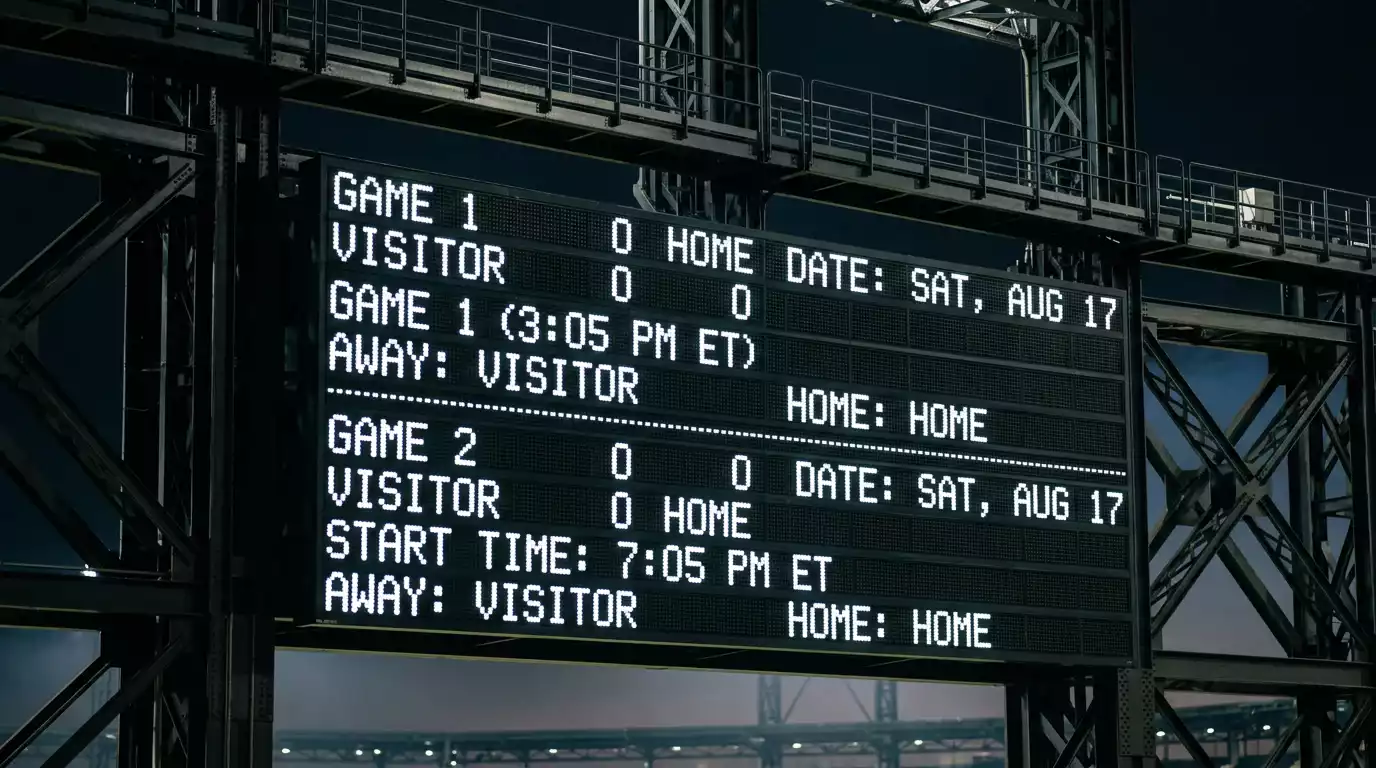
The traditional doubleheader is two games at the same stadium with a short break between them – typically thirty minutes between the end of game one and the start of game two. Both games count as a single ticket for spectators. Traditional doubleheaders are now less common and usually reserved for makeup games following weather postponements.
The day-night doubleheader is two games at the same stadium separated by a longer gap, usually three to four hours. Each game has its own ticket and its own crowd. Day-night doubleheaders are scheduled in advance, usually as makeups for previously postponed games, and they’re common enough that they show up several times across most teams’ schedules each season.
The seven-inning rule that briefly applied during the pandemic-era doubleheaders is no longer in effect. Both games of a 2026 doubleheader are full nine-inning games. The aggressive pitching changes and bullpen-heavy approach that became normalised in seven-inning games have carried over into nine-inning games for game two, which is one of the structural factors that makes the second game play differently.
Bullpen state, the dominant variable for game two
The single most important input for handicapping game two of a doubleheader is the bullpen state of both teams after game one. A team that played a tight, multi-pitcher game one with three relievers used has a meaningfully different game two profile than a team whose ace went the distance with a complete game shutout.
The standard pattern in MLB is that high-leverage relievers – closers, eighth-inning setup men – used in game one are unavailable in game two. Mid-leverage middle relievers might be available but with reduced workload. Long relievers and starters scheduled for the next day are sometimes pressed into emergency relief if the situation demands. The result is that game two is structurally a higher-runs environment because the relievers pitching the late innings are typically of lower quality than they would be in a normal game.
The implication for game two totals: the over has a small but consistent edge across doubleheader samples, especially when both teams used multiple relievers in game one. The market often prices game two slightly under fair value because the casual narrative is “tired teams play lower-scoring games,” which is exactly backwards – tired bullpens produce more runs, not fewer.
I check the bullpen state explicitly before placing any game two bet. Who pitched in game one, how many pitches each reliever threw, how many appearances they’ve made over the past three days. The information is publicly available on the MLB game logs. Casual bettors don’t bother to check; sharp bettors check every time.
The 27th-man rule and roster manipulation
MLB allows teams to add a 27th player to the roster specifically for doubleheader days, which usually means an additional pitcher – often a fresh arm from the minor-league system who hasn’t been pitching recently. The 27th man is allowed to pitch in either game and provides a structural relief option that wouldn’t exist on a normal day.
The 27th-man addition partially mitigates the bullpen-state effect on game two but doesn’t fully eliminate it. The fresh arm is typically a lower-quality pitcher than the regular bullpen members – if he were better, he’d already be on the main roster. His presence allows the manager to absorb some innings without burning the regular bullpen, but the innings absorbed by the 27th man are typically lower-quality than the innings the regular relievers would have provided.
The strategic implication: teams that use the 27th man for early-game length – absorbing innings four through six in game two – are signalling that their main bullpen is exhausted and the late innings will be staffed by their best relievers fresh. Teams that hold the 27th man for late-inning leverage are signalling that their main bullpen is fresher and their late innings will be a mix of best-available relievers from the regular pen plus the 27th-man option. Reading the manager’s tendency on this question is part of the game-two analysis.
Lineup composition, the second-order effect
Most MLB lineups change between game one and game two of a doubleheader. The standard pattern is that one or two starters from game one are rested in game two, with backups stepping in. The reasoning is workload management – catchers, especially, rarely play both games of a doubleheader, and platoon hitters often start one game based on the opposing pitcher’s handedness.
The line for game two reflects the actual lineup posted, not the lineup you’d predict from game one. The information arrives later in the day for game two, and the line moves accordingly. The window for placing a game-two bet on the right lineup before the line corrects is the period after lineups confirm but before the bookmaker has fully repriced.
The strategic insight: game two often features a backup catcher, sometimes a platoon-driven outfielder swap, and occasionally a rested star bat. The aggregate offensive output for game two lineups is typically slightly worse than game-one lineups, which partially offsets the bullpen-state effect on totals. The two effects usually balance to produce a game-two total that’s similar to or slightly higher than game one, not dramatically different.
The exception is the catcher swap. A backup catcher pitching to a different starting pitcher than the regular catcher pitched to in game one can affect pitch selection, framing and overall pitcher performance. The effect is small but real, and it occasionally produces game-two starter underperformance relative to projections that the line doesn’t fully capture.
Travel, fatigue and the day-night specific challenges
Traditional doubleheaders – both games on the same day at the same stadium with a short break – don’t introduce significant travel-related fatigue beyond the normal effects of playing on consecutive days. Day-night doubleheaders are similar; both teams are in the same city for the full day.
The fatigue that does affect performance is mental more than physical. By the late innings of game two, players have been at the stadium for ten or twelve hours. Concentration drops. Defensive plays that would have been routine earlier become slightly more error-prone. The error-rate effect doesn’t usually move the line meaningfully, but it does contribute to the slight elevation in game two scoring across doubleheader samples.
The pace context matters here. Average MLB game time has settled at 2 hours 38 minutes – the third consecutive season at or below 2:40, the first such streak in 40 years. Faster games mean shorter doubleheader days, which mean less accumulated fatigue. Compared to a decade ago, modern doubleheaders end with players considerably less worn out than older nine-inning-plus formats. The fatigue effect on game two is smaller than it used to be, and the line should reflect that.
Where the doubleheader edges actually live
Across hundreds of doubleheader samples, three angles consistently produce positive expected value.
Game two over when game one had heavy bullpen usage. The simplest and most reliable angle. If game one used three or more leverage relievers per side, game two’s over is structurally favoured by the bullpen-state effect.
Game two underdog moneyline when the favourite’s bullpen was hammered in game one. The favourite’s price doesn’t always fully account for the bullpen depletion, especially when the favourite is at home and the public assumes home advantage carries over.
Game one under at lower-leverage matchups. The opposite angle. Both managers in a less-important matchup tend to manage game one conservatively, knowing they have to navigate game two. Quick hooks, conservative bullpen usage, and the resulting tighter game suppress runs in game one slightly below the line’s expectation.
The angles compound when applied to specific scenarios. A game-two over after a heavy-bullpen game one with the favourite’s relief depth specifically depleted is a strong play if the line hasn’t moved by mid-afternoon. The market eventually corrects these, but the window is often two or three hours wide – enough to act.
Handicapping game two as part of the broader workflow
Doubleheader analysis is one of the spots in the MLB schedule where having a structured pre-bet workflow pays off most. The inputs are the same inputs you check every game – starter quality, lineup, weather, park – but they need to be re-checked specifically for game two with the bullpen-state and lineup-composition layers added.
The practical workflow: handicap game one as a normal MLB game using your standard inputs. Watch game one with attention to bullpen usage and any injury situations that could affect game two. Re-handicap game two from scratch when the lineup posts, factoring in the actual bullpen state from game one and the lineup adjustments. Don’t lazy-roll your game-one read into game two; the games are different.
The starting pitching matchup for game two matters as much as for any other game, but the analysis has to factor in that the bullpen behind that starter is compromised. A starter who normally has seven innings of leash might have only five available in game two if his manager wants to preserve relievers for the rest of the week. The pitcher’s projected workload is shorter than it would be on a normal day, which affects strikeout props and team total expectations.
For the deeper read on how to handicap a starting pitcher matchup from the ground up – the framework that doubleheader analysis builds on top of – my piece on how to read an MLB mound matchup from the ground up covers the full set of inputs that go into the starter analysis. Doubleheaders are just that analysis applied twice, with the bullpen-state and lineup-composition adjustments layered on top.
Is the over really a structural edge in game two of a doubleheader?
Yes, modestly. Game two scoring runs slightly above league average across doubleheader samples, primarily because both bullpens are depleted from game one and the late-inning relievers tend to be lower-quality than they would be in normal games. The edge is small – typically a quarter-run elevation in actual versus expected total – but consistent enough that game two overs are a recurring positive-EV bet when game one used heavy bullpen and the line for game two hasn’t moved to reflect it.
What is the 27th-man rule and how does it affect doubleheader betting?
MLB allows teams to add a 27th player to the active roster specifically for doubleheader days, almost always a pitcher called up from the minor-league system. The 27th man partially mitigates bullpen exhaustion but doesn’t eliminate it – the call-up is typically a lower-quality arm than the regular bullpen members. Reading whether a team uses the 27th man for early-game length or late-inning leverage tells you something about how the manager views the rest of the bullpen state.
Created by the ”how do you bet Baseball” editorial team.