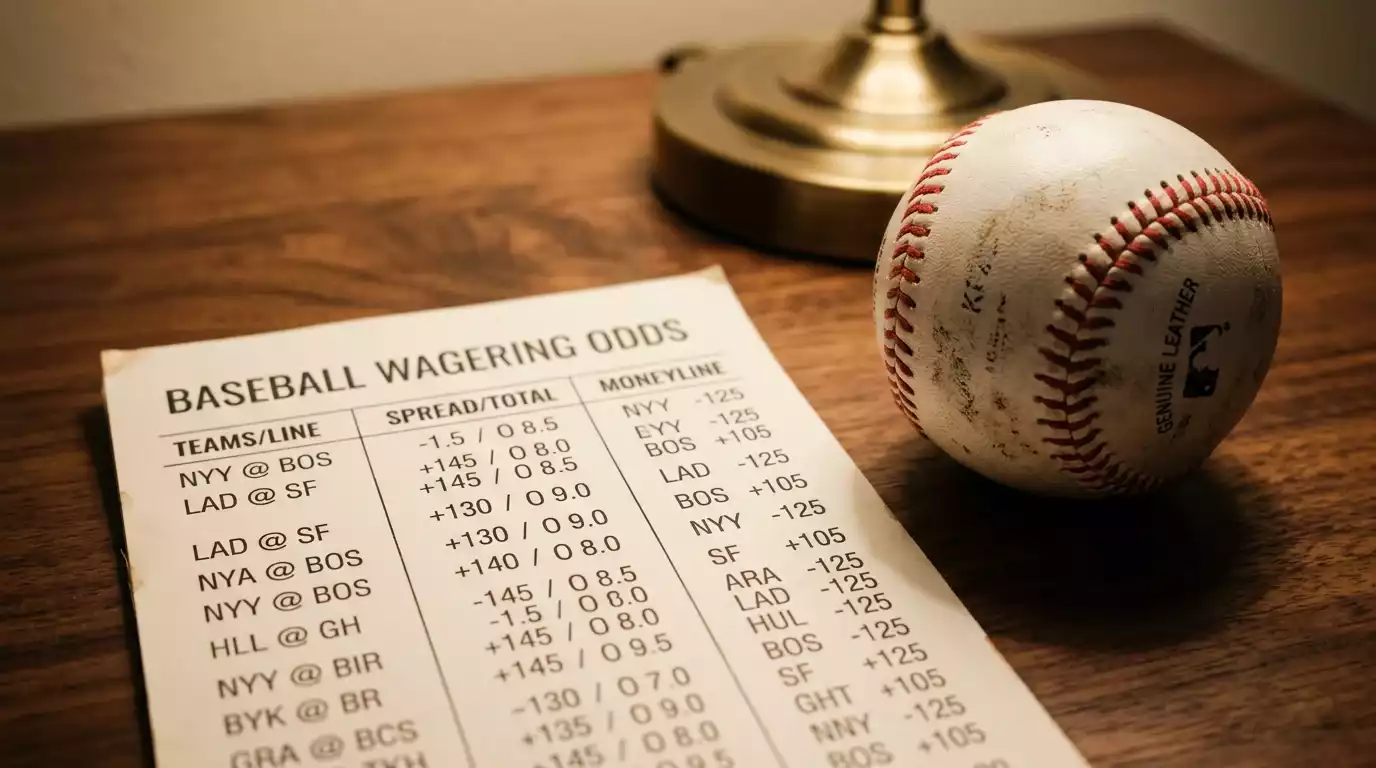
The Five-Inning Rule: How Rain-Shortened MLB Bets Actually Settle
 Available in US
Table of Contents
- The night a thunderstorm settled three of my bets in one inning
- The five-inning rule, explained without the legalese
- Moneyline: the cleanest market under the rules
- Run line: where the small print gets unfriendly
- Totals: the market most punters get wrong
- Specials, props, and the markets nobody reads carefully
- Pitch count, suspension, and the modern weather toolkit
- The pre-bet checklist for weather-uncertain games
The night a thunderstorm settled three of my bets in one inning
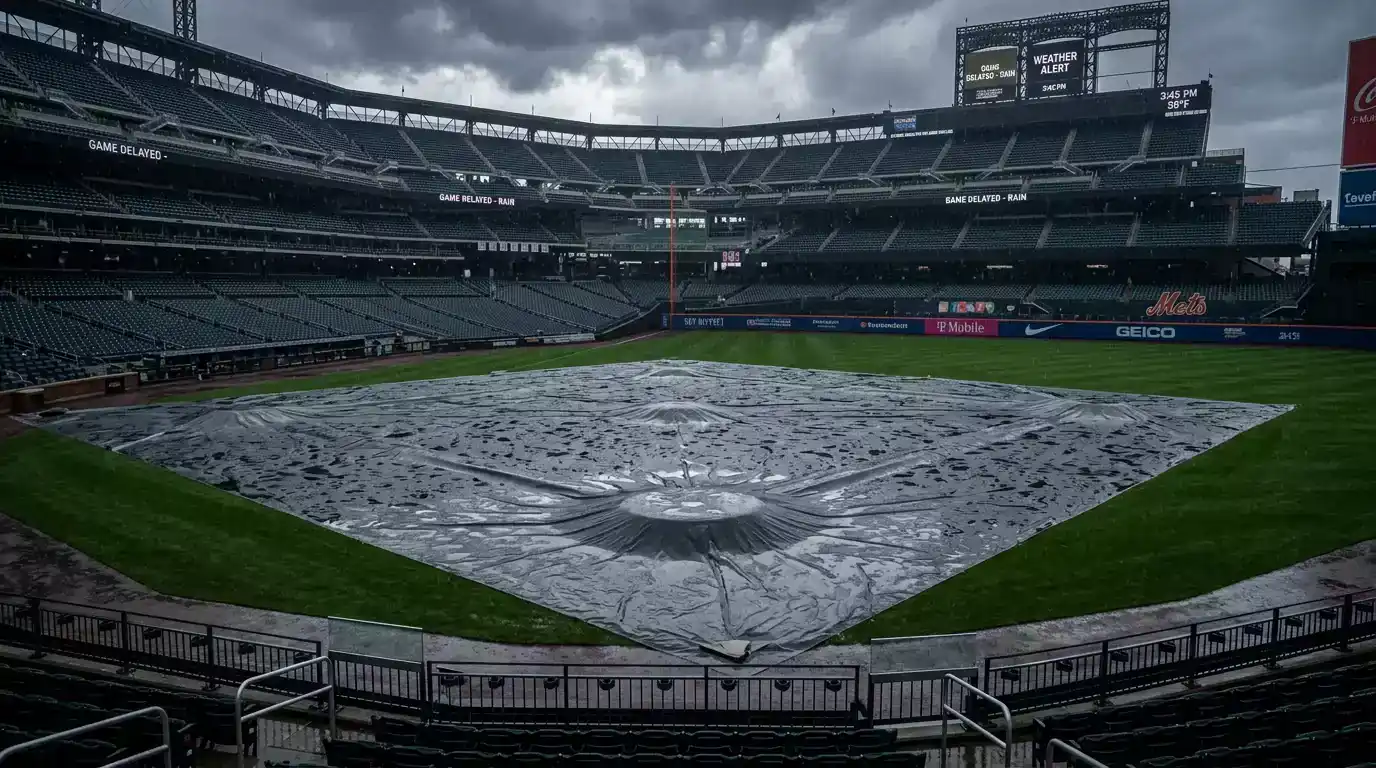
One August evening I had three open bets on the same East Coast game – a moneyline favourite, the over on the total, and an F5 over. A line of severe storms rolled across the area in the bottom of the fifth, the umpires called the game after a 90-minute delay, and I went to settle up expecting all three bets to be live. The moneyline cashed. The over voided. The F5 over cashed. Three different rules applied to three bets on the same game on the same night, all because of one storm. If you don’t know the settlement protocols going in, rain-shortened games are guaranteed to surprise you.
Rain delays are a fact of MLB life. Most years see somewhere between 100 and 150 games shortened or affected by weather, with a meaningful subset called early enough that they settle differently than they would in regulation. The settlement rules aren’t intuitive, they vary by market type, and they differ between books. Knowing them is the difference between accepting variance and getting blindsided.
The five-inning rule, explained without the legalese
An MLB game is officially complete – and bets settle accordingly – once five innings have been played. More precisely, once the home team is winning after the visiting team’s fifth inning, or once the bottom of the fifth has been completed regardless of who is winning. That’s the threshold every settlement protocol works off.
If the game is called before five innings are official, most markets are voided and stakes refunded. The exact threshold can shift slightly based on the score state – an unfinished half-inning where the home team is already winning sometimes counts as official – but the practical rule of thumb is: if the game has gone the full five with the home team not in a winning position requiring more play, settlement is generally voided.
If the game has reached the five-inning threshold and is then called, the moneyline settles on the score at the moment of the call. Run line and team total bets generally settle the same way. Total runs bets behave differently and are where most settlement confusion comes from.
The rule sounds simple in summary. The complications come from individual market types each having their own treatment, with bookmaker variations layered on top.
Moneyline: the cleanest market under the rules
Moneyline is the easiest rain-shortened bet to predict. If the game has gone five innings and the home team is winning or tied, settlement happens on the score at the moment the game is called. If the visitor is leading after a completed top of the fifth, the bet stands and settles on the visitor.
The clean treatment of moneyline is why it’s often the safest market to bet during weather-uncertain windows. If you’ve identified an early lead opportunity and the forecast is rough, the moneyline is the bet that’s most likely to actually settle in the way you expect even if the game ends prematurely.
The edge case to watch: a game called in the middle of the fifth inning. If the visiting team has already batted in the fifth and the home team is leading, the game is generally official and the bet settles on the home team. If the home team hasn’t yet batted in the bottom of the fifth and they’re trailing, the game is usually called as a non-game and bets void. The minute-by-minute timing during the fifth inning is what determines whether your bet stands.
Run line: where the small print gets unfriendly
Run line bets in rain-shortened games are settled on the actual margin at the moment of the game’s official conclusion, regardless of how many innings remain unplayed. If you took the favourite at -1.5 and the game is called with the favourite leading by exactly 1, your bet loses – the unplayed innings that might have produced an insurance run don’t help you.
The implication for run line strategy in unsettled weather conditions: avoid the favourite at -1.5 on games with rain in the forecast. If the game is called early with a 1-0 lead, you’ve lost the bet despite having the right side. Conversely, the +1.5 underdog has structural value in rain-likely conditions because the same early-call protection that hurts the favourite now helps the underdog who might have given up later runs.
Some books offer a partial-game run line that adjusts the margin based on the number of innings played. This is rare at UK operators but available at a few. The standard treatment across most UK books is the full -1.5/+1.5 settling on the actual scoreline at the time of the call, with no partial adjustment.
Totals: the market most punters get wrong
Total runs bets in rain-shortened games are where the rules get messiest, because there’s a structural mismatch between what the bet was about (a nine-inning total) and what actually happened (fewer than nine innings).
The standard rule across most UK books: total runs bets void if the game doesn’t reach the bookmaker’s stated minimum number of innings. The threshold varies by book – some require nine innings to be played for the total to settle, others accept eight, others accept any official game (five+ innings).
This is the single most important settlement rule to verify before placing a totals bet on a weather-uncertain game. The same totals bet on the same game can void at one book and stand at another. The voiding book refunds your stake; the non-voiding book settles on the actual runs scored, which is almost always under – because shortened games have fewer innings to score in.
The asymmetry is severe. A nine-inning game projecting to 8.5 runs that’s called after 6.5 innings might have produced 5 runs. The over bet at the non-voiding book loses; the over bet at the voiding book is refunded. The difference in expected value is meaningful, especially in summer when rain delays are common.
The general bettor’s rule: prefer books with a nine-inning minimum for totals settlement during summer months. The slightly worse line at a more conservative book is often worth it relative to the structural risk of getting locked into an early-call settlement at a less conservative book.
Specials, props, and the markets nobody reads carefully
Player props and specials have their own settlement quirks in rain-shortened games. The general principle: if the player is on the field at the moment the game ends, his stats from the partial game count. If he hasn’t yet batted or pitched, the bet voids.
For pitcher strikeout props: a starter pulled before the game is called gets credit for whatever strikeouts he recorded before exiting. The bet settles on the actual K total when his appearance ended, regardless of how many innings the game ultimately lasted. If the game itself is called before becoming official, some books void all props on the basis that the game wasn’t real – others settle on the partial-game stats. The book-specific terms are what determine the outcome.
For hitter props – home runs, hits, RBIs – the general rule is that the bet stands if the player batted at least once before the game ended. If he hasn’t had a plate appearance, the bet voids. Whether the game itself was official doesn’t always matter; what matters is whether the player got his at-bat.
NRFI and YRFI bets are the cleanest of all. The first inning is virtually always completed before any rain stoppage, so settlement is rarely affected. If a delay hits during the first half-inning before completion, settlement protocols vary, but the situation is rare enough that it’s not a frequent concern.
Pitch count, suspension, and the modern weather toolkit
Modern MLB has more tools for managing weather than it did a decade ago. Suspended games – played to a stoppage point and resumed the next day – are now common in late-season spots where the game has playoff implications. Doubleheader makeups are scheduled aggressively. The result is that fewer games end up settled on early-call rules than the rate of summer storms might suggest.
For bettors, suspension is a different settlement scenario than calling. A suspended game generally doesn’t settle until the game is completed – which can be the next day, two days later, or in some rare cases not at all if it’s no longer needed for standings. Bets stay open during the suspension. This can be uncomfortable if your bet is locked in a losing position after five innings and the game’s resumption could only worsen the score, but the formal settlement waits for completion.
Average MLB game time has settled at 2 hours 38 minutes – the third consecutive season at or below 2:40, the first such streak in 40 years. The pace change has materially reduced the number of games that get called in unfinished states, because fewer games are still in progress when the worst of summer evening storms arrive. Only three nine-inning games in 2025 ran 3:30 or longer, compared to 391 such games in 2021. Faster games are less weather-exposed.
The pre-bet checklist for weather-uncertain games
Three checks before placing any meaningful bet on a game with rain in the forecast.
Check the bookmaker’s specific settlement protocol for the market you’re betting. Moneyline rules are usually consistent. Totals rules vary widely. Run line and props each have their own treatment. The terms and conditions or the help section of every UK book lists these explicitly, but you have to look.
Cross-reference the actual forecast against the line. If the line hasn’t moved despite rain becoming more likely, the bookmaker’s pricing is lagging the conditions. That’s an angle for fading the over (since rain favours unders structurally) or for taking the favourable run-line position (the underdog at +1.5 with an early-call risk).
Decide whether your bet is robust to early call. Bets that need a specific late-inning event – a closer entering, a starter’s tenth strikeout, a multi-run inning in the eighth – are vulnerable. Bets on early-game outcomes – NRFI, F5 markets, first-five-innings totals – are mostly weather-immune.
The settlement complexity around early game endings is one of two major MLB-specific protocol questions every bettor should understand. The other is the listed-pitchers rule, which determines what happens to your bet when a starter scratches before first pitch. For the deeper read on that protocol and how it interacts with bet types, my piece on how the listed-pitchers rule actually works in MLB betting covers the second major settlement quirk.
Does my totals bet settle if a game ends after seven innings due to rain?
It depends on the bookmaker. Some UK books require the full nine innings to be played for totals to settle – anything less voids the bet. Others accept eight innings, others accept any official game of five or more innings. The variation is significant and the difference between a void and a loss can be meaningful in your bottom line. Always check the specific terms of the operator before placing a totals bet on a game with weather risk.
What happens to my run line bet if the game gets suspended?
Suspended games generally remain open until the game is completed – sometimes hours, sometimes days later. The bet stays live during the suspension period and only settles when the resumed game finishes. This is different from a called game, where the bet settles on the partial-game scoreline. Suspension means waiting; calling means settling. Make sure you understand which scenario applies before assuming the bet has resolved.
Can a postponed MLB game void all my bets?
Yes, if the game is fully postponed before any innings are played. Bets typically void and stakes are refunded. If the game is rescheduled to a later date, the bet generally doesn’t carry forward to the new date – it’s voided regardless of when the makeup happens. Some books carry futures and series-related bets through to the rescheduled date, but daily game bets are almost always voided.
Written by the editors at how do you bet Baseball.